Programme highlights
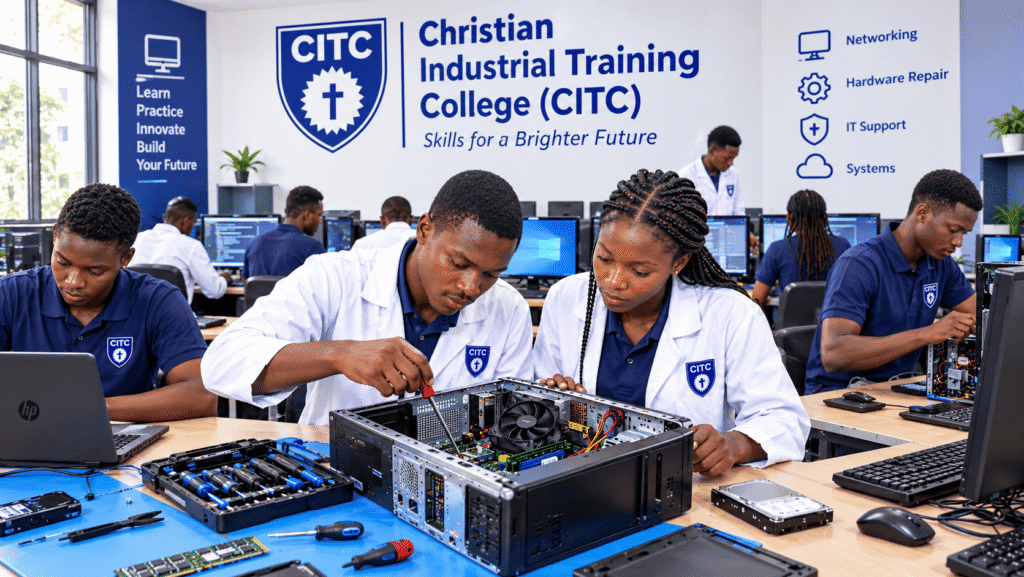
- It is designed to equip trainees with practical skills required to install, operate, and maintain computer systems, networks, and software applications within commercial and public sectors
Course modules
- 1. Core Units of Competency (Technical Skills)
- These form the core practical baseline evaluated during external practical assessments:
- Perform Computer Repair and Maintenance: Diagnosing hardware/software faults, replacing components, and preventive servicing.
- Perform Computer Networking: Network configuration, setup, and structural cabling.
- Install Computer Software: Operating systems installation, utility software configuration, and anti-virus deployment.
- Develop Computer Program: Foundational programming principles (typically utilizing languages like C or HTML).
- Manage Database Systems: Creating and querying database configurations (such as MS Access or relational structures).
- Manage Operating Systems: System utility setups and administrative procedures.
- 2. Common / Foundation Units
- Apply Basic Electronics: Electron flow, circuit components, number system conversions (binary/hexadecimal), and PN junction diodes.
- 3. Basic Units of Competency (Workplace Essentials)
- Communication Skills
- Numeracy
- Digital Literacy
- Entrepreneurial Skills
- Employability Skills
- Environmental Literacy
- Occupational Safety and Health Practices (OSH)
Career outcomes
- Graduates of this program transition into roles such as ICT Support Technician, Help Desk Support, Network Assistant, and System Administrator Associate.
Entry requirements
- KCSE Mean Grade D (Plain) or D+ (Plus), or an ICT Technician Level 4 certificate with one year of experience.
Fees and dates
- Department
- School of ICT
- Level
- Level 5 (Certificate)
- Duration
- 2 years
- Intake
- January,May,September
- Tuition
- KES 17,500 @ Term
Ready to join ICT Technician Level 5?
Take the next step in your career. Applications for the next intake are now open.